Reading Time: 2 Minutes
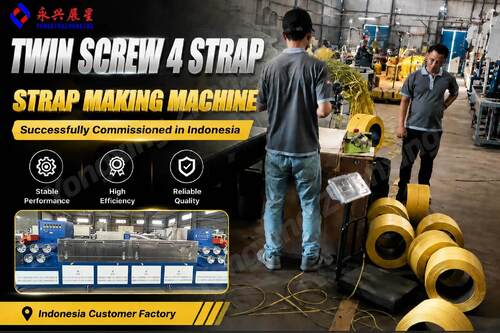
PP Twin Screw 4 Strap Production Line Successfully Commissioned in Indonesia
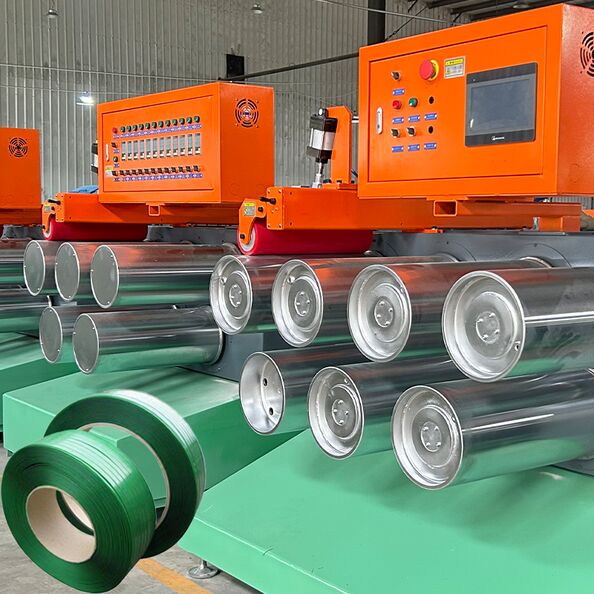
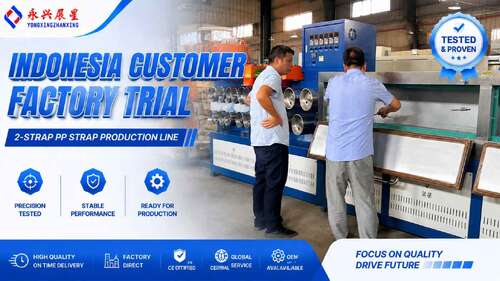
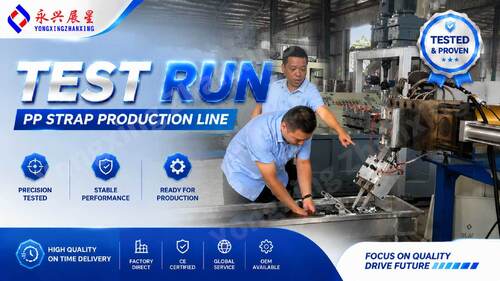
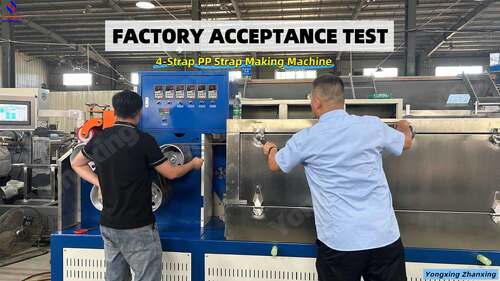
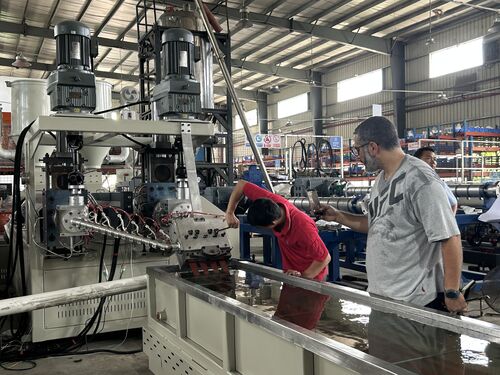
PP Strap Production Line running at the customer's factory in Indonesia.
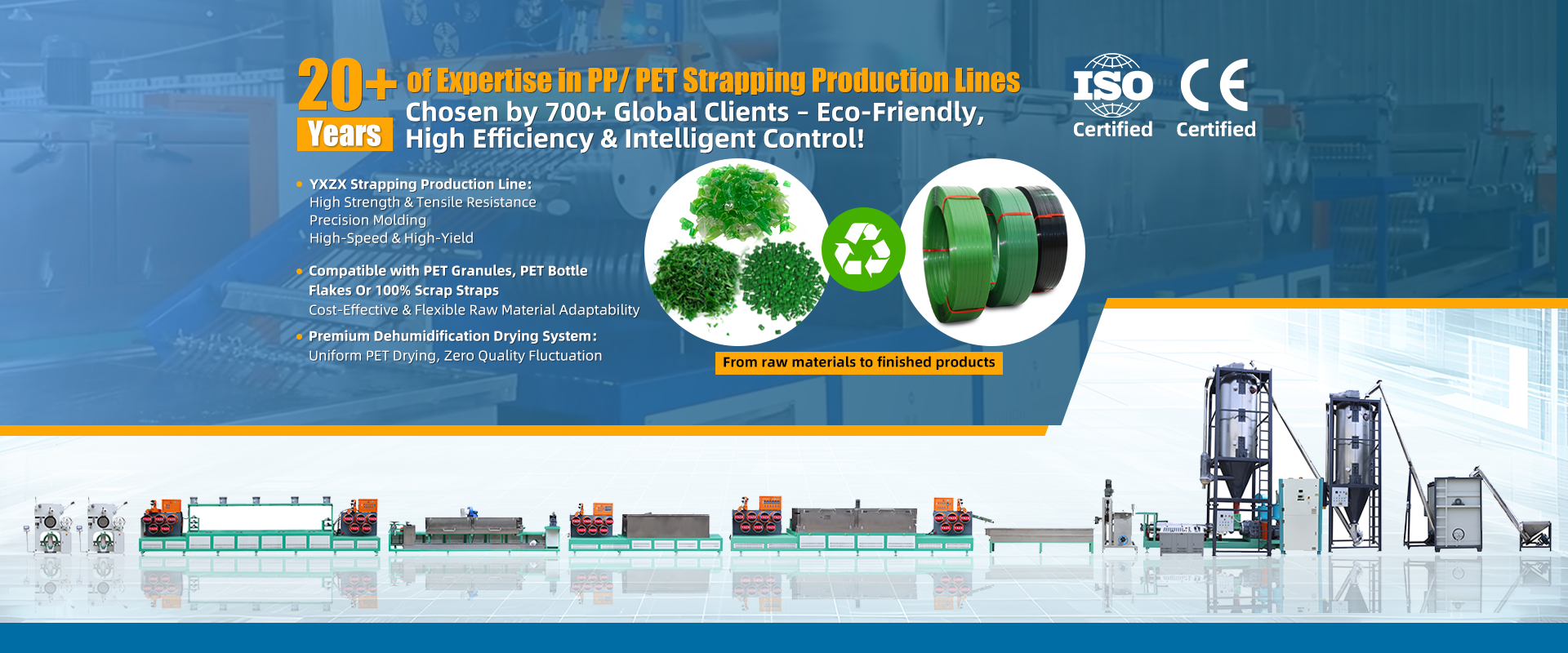
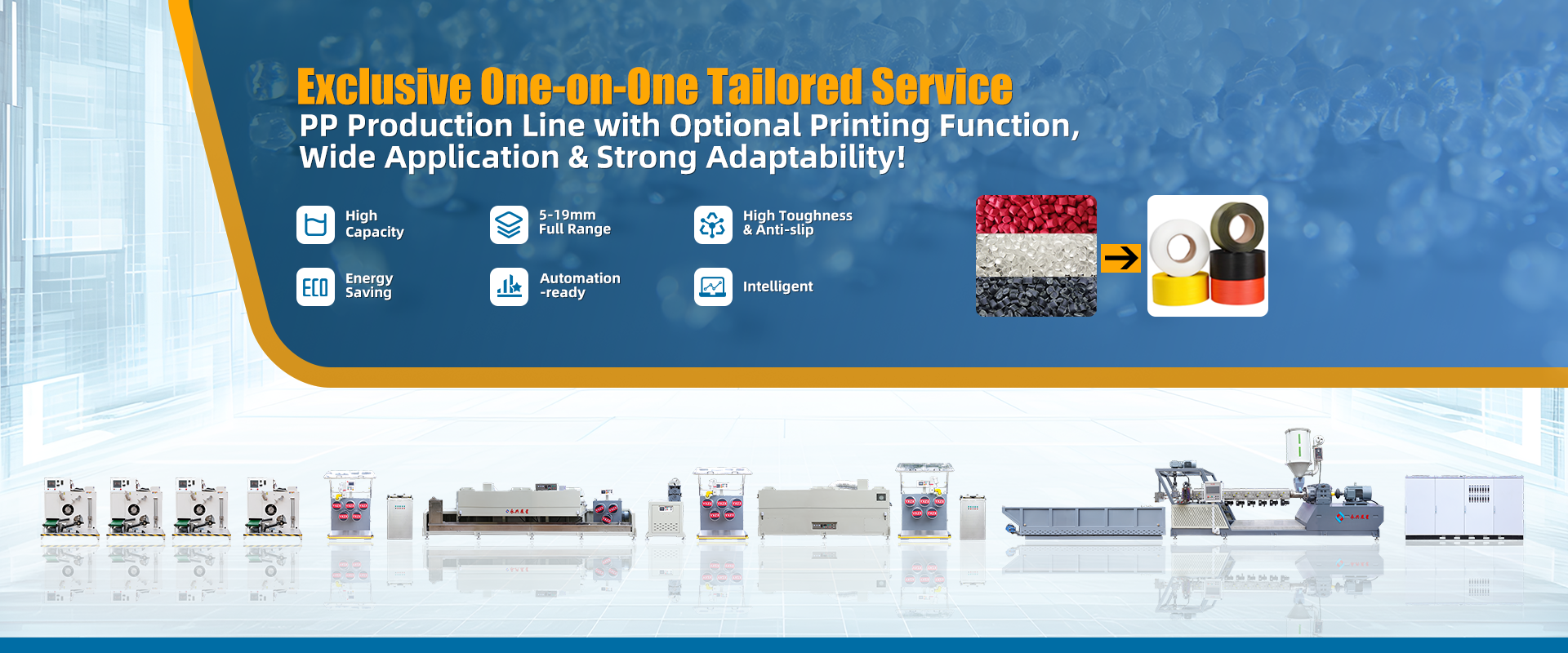
A PP Twin Screw 4 Strap Production Line supplied by Yongxing Zhanxing has been successfully installed, commissioned, and put into operation at a customer's factory in Indonesia.
The production line uses two independent screw extrusion systems, allowing customers to adjust production according to their actual capacity requirements.
When higher production capacity is needed, both sides can run simultaneously to produce four PP straps. When lower output is sufficient, one side can operate independently to produce two PP straps.
The line can also be configured for core-filled PP strap production, providing additional flexibility for different product requirements.
Real Customer Factory Production
The equipment is now running successfully at the customer's factory in Indonesia.
🎥 Watch the real customer factory video→YouTube Video←
The video shows the PP Strap Production Line operating under actual customer production conditions after installation and commissioning.
This project continues our previous shipment update:
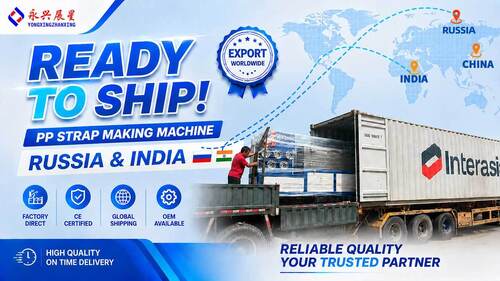
Yongxing Zhanxing Successfully Ships One out for Four PP Strap Production Lines to Indonesia and China
From shipment → installation → commissioning → production, the equipment has successfully entered customer production.
Looking for a Flexible PP Strap Production Line?
If you are looking for a PP Strap Production Line with flexible production capacity, 2-strap / 4-strap production options, or core-filled PP strap capability, contact us with your requirements.
Please send us your:
Strap width
Strap thickness
Production capacity
Number of outputs
Raw material
Destination country
Yongxing Zhanxing can provide a customized PP Strap Production Line solution based on your production needs.
Recommended Reading
Yongxing Zhanxing Successfully Ships One out for Four PP Strap Production Lines to Indonesia and China
How to Choose the Right PP Strap Production Line
Common PP Strap Quality Problems and Solutions
Reading Time: 5 Minutes
Introduction
Recycling has become a key driver of the global packaging industry. Every year, millions of PET bottles are collected, cleaned, and processed into valuable raw materials instead of ending up in landfills.
One of the most successful applications is manufacturing high-quality PET straps from recycled PET bottle flakes. With the right PET Strap Production Line, recycled materials can be transformed into durable industrial strapping that meets the demands of logistics, construction, paper, and metal packaging.
This article explains how recycled PET bottles become finished PET straps and why more manufacturers are investing in sustainable PET strap production.
From Waste Bottles to Valuable Packaging Materials
PET bottles are no longer considered waste. After recycling, they become an important raw material for producing industrial packaging products.
The typical process includes:
Collecting used PET bottles
Sorting and removing contaminants
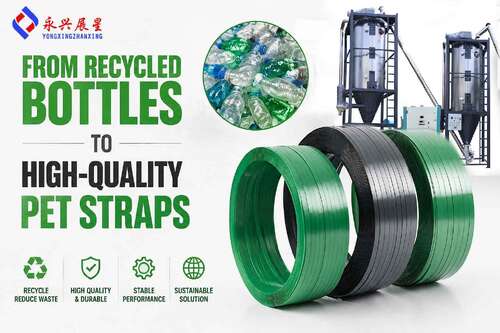
Washing and crushing into PET bottle flakes
Drying and crystallization
Feeding into the PET Strap Production Line
Using recycled PET bottle flakes for PET strap production not only reduces raw material costs but also supports sustainable manufacturing by giving plastic waste a second life.
Recycled PET bottle flakes are the primary raw material used in modern PET strap manufacturing.
How Are PET Straps Manufactured?
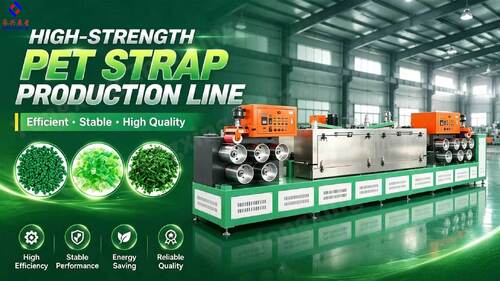
A modern PET Strap Production Line converts recycled PET flakes into finished straps through several precisely controlled production stages.
The main manufacturing process includes:
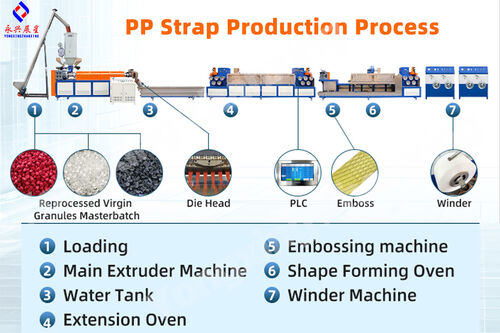
Crystallizing and drying
Extrusion
Stretching
Cooling
Embossing (optional)
Automatic winding
Each stage plays an important role in ensuring stable dimensions, smooth surfaces, and consistent tensile strength.
An efficient PET strap manufacturing process allows manufacturers to produce premium-quality straps while minimizing material waste.
Why Recycled PET Performs So Well
Many people assume recycled materials produce lower-quality products. In reality, properly processed PET bottle flakes can achieve excellent performance.
Modern PET strap production lines using recycled PET are capable of producing straps with:
High tensile strength
Stable width and thickness
Excellent elongation
Consistent winding quality
Reliable performance for heavy-duty packaging
This makes recycled PET an economical and environmentally responsible choice for industrial packaging.
🎥 Watch the Production Process
See how recycled PET materials are transformed into finished PET straps on a modern production line.
YouTube Video: https://www.youtube.com/watch?v=jk78bJ62Qks
Why More Manufacturers Are Choosing Recycled PET?
Besides reducing production costs, recycled PET also helps manufacturers meet increasing environmental requirements.
Advantages include:
Lower raw material costs
Reduced dependence on virgin plastics
Support for circular economy initiatives
Reduced plastic waste
Improved sustainability credentials
As global demand for eco-friendly packaging continues to grow, investing in sustainable PET strap production has become an attractive opportunity for manufacturers worldwide.
High-quality PET straps produced from recycled PET bottle flakes can meet demanding industrial packaging requirements.
Expert Insight
The quality of recycled PET straps depends far more on raw material preparation than on the extrusion process itself.
During many production projects, engineers find that inconsistent moisture content or contaminated PET flakes has a greater impact on strap quality than machine settings. Investing in a reliable washing system and an efficient crystallizing and drying system is essential for achieving stable production and consistent product performance.
FAQ
1. Can recycled PET bottles really produce high-quality PET straps?
Yes. When properly cleaned, dried, and processed, recycled PET bottle flakes can produce PET straps with excellent tensile strength and consistent quality.
2. What raw materials are suitable for a PET Strap Production Line?
Most production lines support recycled PET bottle flakes, virgin PET resin, or mixed raw materials.
3. Is recycled PET more cost-effective than virgin PET?
In many markets, recycled PET flakes offer lower material costs while maintaining high product quality, making them an economical choice for manufacturers.
4. Does recycled PET affect strap strength?
Not when processed correctly. Proper drying, filtration, and stretching ensure that recycled PET straps meet industrial packaging requirements.
5. Which industries commonly use PET straps made from recycled materials?
They are widely used in logistics, steel, construction materials, paper mills, textile packaging, and pallet transportation.
📚 Recommended Reading
Why Choose a PET Strap Production Line for High-Strength Packaging?
PP Strap vs PET Strap Production Line: Which Investment Is Right for Your Business?
Virgin PP vs Recycled PP Materials for PP Strap Manufacturing
CTA
Ready to Start PET Strap Manufacturing?
If you are planning to produce PET straps from recycled bottle flakes, selecting the right production line is the first step toward long-term success.
Whether your goal is higher production efficiency, lower raw material costs, or sustainable packaging, our team can help you find a solution that matches your production requirements.
Contact us to learn more about PET Strap Production Line solutions.
Reading Time: 5 Minutes
Introduction
As industries continue to demand stronger, safer, and more sustainable packaging solutions, PET straps have become the preferred alternative to traditional steel and PP strapping in many heavy-duty applications.
Whether you manufacture building materials, paper products, metal coils, textiles, or palletized goods, investing in a PET Strap Production Line can help improve packaging performance while reducing long-term operating costs.
This article explains why more manufacturers are choosing PET strapping, how modern production lines achieve consistent quality, and what to consider before investing in a PET strap making machine.
Why Are More Manufacturers Choosing PET Straps?
The demand for high-strength PET straps continues to grow because they combine excellent tensile strength with lower weight and better corrosion resistance than steel strapping.
Compared with conventional packaging materials, PET straps offer several advantages:
High tensile strength for heavy-duty packaging
Excellent shock absorption during transportation
Rust-free and weather-resistant performance
Lower packaging and logistics costs
Suitable for recycled PET bottle flakes
Environmentally friendly production
These benefits make a PET strap production line for recycled PET bottles an attractive solution for manufacturers seeking both performance and sustainability.
Finished PET straps offer high tensile strength and excellent durability for industrial packaging.
What Makes PET Straps Strong Enough for Heavy-Duty Packaging?
Unlike polypropylene straps, PET straps are designed for demanding applications that require higher strength and better load retention.
A modern PET strap making machine for heavy-duty packaging combines several key production stages:
PET crystallizing and drying
Precision extrusion
Multi-stage stretching
Embossing (optional)
Automatic winding
Each stage contributes to producing straps with consistent dimensions, smooth surfaces, and reliable tensile strength.
This is one of the reasons why many manufacturers are replacing traditional steel strapping with PET straps in logistics and industrial packaging.
🎥 Watch a PET Strap Production Line in Operation
Want to see how a PET Strap Production Line works in a real factory?
👉 YouTube Video Here
How Modern PET Strap Production Lines Improve Efficiency
Today's automatic PET strap production machines are designed not only to increase production capacity but also to reduce energy consumption and labor costs.
Common features include:
PLC touch-screen control
Automatic temperature regulation
Stable extrusion performance
Automatic winding systems
Energy-saving heating technology
These improvements help manufacturers achieve stable production while maintaining consistent product quality throughout the PET strap manufacturing process.
Modern PET Strap Production Lines integrate extrusion, stretching, and winding into one efficient production system.
Expert Insight
One of the most common mistakes in PET strap production is underestimating the importance of moisture control.
PET is highly sensitive to moisture. Even properly cleaned PET bottle flakes can affect strap quality if they are not fully dried before extrusion. That's why professional PET Strap Production Lines include a crystallizing and drying system to ensure stable processing and consistent tensile strength.
For manufacturers planning a PET strap production line investment, selecting the right drying and extrusion system is just as important as choosing the production capacity.
FAQ
1. What raw materials can be used in a PET Strap Production Line?
Most production lines support recycled PET bottle flakes, virgin PET resin, or a combination of both.
2. Is PET strap stronger than PP strap?
Yes. PET straps generally provide higher tensile strength and are better suited for heavy-duty packaging applications.
3. Can recycled PET bottles produce high-quality PET straps?
Yes. With proper cleaning, drying, and extrusion, recycled PET bottle flakes can produce high-quality PET strapping.
4. What industries commonly use PET straps?
PET straps are widely used in logistics, steel, paper, aluminum, textile, construction materials, and pallet packaging.
5. How do I choose the right PET Strap Production Line?
You should consider raw material type, production capacity, automation level, energy efficiency, and after-sales technical support before making a decision.
📚 Recommended Reading
PP Strap vs PET Strap Production Line: Which Investment Is Right for Your Business?
How to Choose the Right PP Strap Production Line | Cost & Buying Guide
Virgin PP vs Recycled PP Materials for PP Strap Manufacturing
How Recycled PET Bottles Become High-Quality PET Straps(Coming on)
CTA
Looking for a PET Strap Production Line?
Whether you plan to produce PET straps from recycled bottle flakes or virgin PET materials, choosing the right production line is the foundation of long-term success.
Our team can help you select a suitable solution based on your production capacity, raw material requirements, and business goals.
Contact us to discuss your PET strap manufacturing project.
Reading Time
5 Minutes
Introduction
Profitability is one of the biggest concerns for manufacturers entering or expanding the PP strap manufacturing business. While reducing production costs is important, long-term profitability depends on much more than saving money.
A successful PP Strap Production Line should help manufacturers improve production efficiency, maintain stable product quality, reduce downtime, and maximize return on investment.
In this guide, we'll explore practical ways to improve profitability and build a more competitive PP strap manufacturing business.
1. Focus on Production Efficiency Instead of Output Alone
Many manufacturers only look at hourly production capacity when purchasing equipment. However, overall profitability depends on how efficiently the production line operates every day.
Key factors include:
Stable extrusion performance
Consistent strap dimensions
Automatic winding
Reduced downtime
Easy maintenance
Improving PP strap production efficiency often has a greater impact on profits than simply increasing production speed.
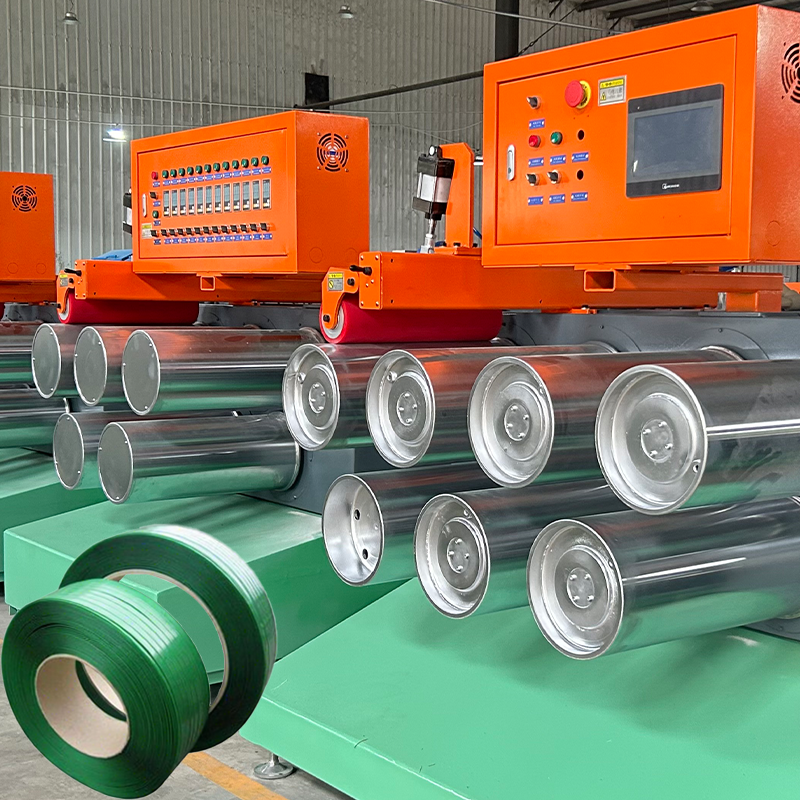
Modern PP Strap Production Line designed for stable and efficient manufacturing.
2. Improve Product Quality to Increase Profit Margins
Higher-quality straps often command better prices and reduce customer complaints.
Manufacturers can improve profitability by producing straps with:
Stable width and thickness
High tensile strength
Smooth surface finish
Consistent embossing
Uniform winding
Reliable product quality helps build long-term customer relationships and repeat orders.
🎥 Watch the PP Strap Production Line in Operation
Choosing the right PP Strap Production Line is easier when you can see it operating in a real factory environment.
Watch the video below to explore the complete production process, including stable extrusion, automatic control, and efficient winding. It offers a practical look at how modern equipment helps improve production efficiency, product quality, and long-term profitability.
▶️ Watch the full machine demonstration below.
YouTube Video →https://www.youtube.com/watch?v=FjrDocN2qyk
After watching the video, continue reading to discover more practical strategies for improving PP strap manufacturing profitability.
3. Reduce Material Waste Throughout Production
Raw materials account for a significant portion of production costs.
Modern automatic PP Strap Production Lines help reduce waste through:
Precise temperature control
Stable extrusion pressure
Accurate dosing
Automatic speed synchronization
Less waste means more finished products from the same amount of raw materials.
4. Invest in Automation for Long-Term Growth
Automation is no longer only for large factories.
Features such as:
PLC touch-screen control
Automatic temperature adjustment
Automatic winding
Real-time monitoring
help reduce labor requirements while improving production consistency.
For manufacturers planning long-term expansion, investing in automation can significantly improve overall profitability.
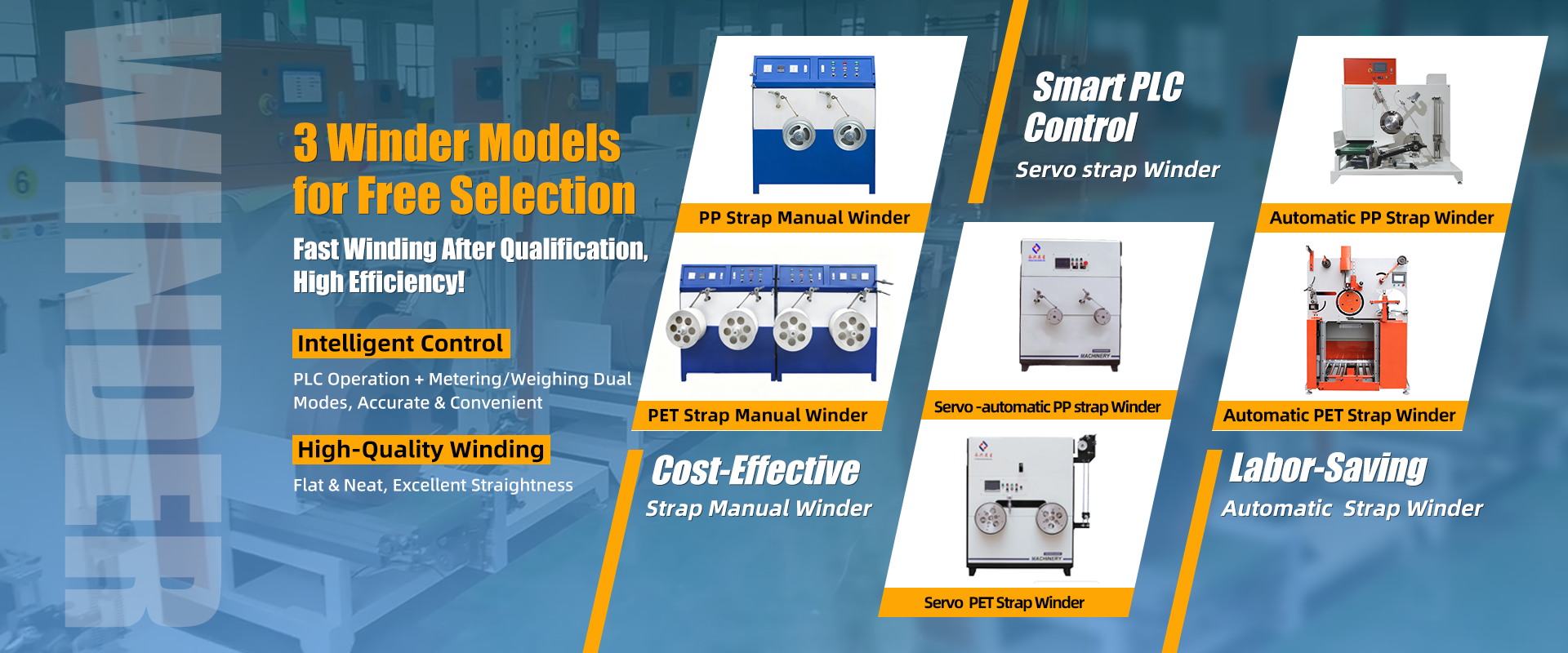
Automatic winding improves production efficiency and reduces labor costs.
Expert Insight
Many new manufacturers believe the cheapest production line offers the highest return on investment.
In reality, experienced engineers often find that production stability, energy efficiency, and long-term maintenance costs have a much greater impact on profitability than the initial purchase price. Choosing equipment with reliable performance can help reduce downtime and create higher long-term value.
FAQ
How can I improve profitability in PP strap manufacturing?
Improving production efficiency, reducing waste, maintaining stable product quality, and investing in reliable equipment all contribute to higher profitability.
Does automation increase production profits?
Yes. Automation can reduce labor costs, improve consistency, minimize downtime, and increase overall production efficiency.
What affects PP strap manufacturing profitability the most?
The biggest factors include raw material costs, equipment efficiency, product quality, production stability, and energy consumption.
Is a fully automatic PP Strap Production Line worth the investment?
For manufacturers with long-term production plans, automatic production lines generally offer better productivity and lower operating costs over time.
How do I choose the right PP Strap Production Line?
Consider production capacity, automation level, energy efficiency, equipment reliability, after-sales service, and future expansion needs before making a decision.
📚 Recommended Reading
How to Reduce PP Strap Production Costs Without Sacrificing Quality
PP Strap Production Cost Guide: Cost to Produce 1 Ton of PP Strap
How to Choose the Right PP Strap Production Line | Cost & Buying Guide
PP Strap vs PET Strap Production Line: Which Investment Is Right for Your Business?
CTA
Looking to Improve Your PP Strap Manufacturing Business?
Whether you're starting a new production project or upgrading an existing factory, selecting the right PP Strap Production Line is one of the most effective ways to improve productivity and long-term profitability.
Contact our team to discuss your production requirements and find a solution tailored to your business goals.
Reading Time: 5 min
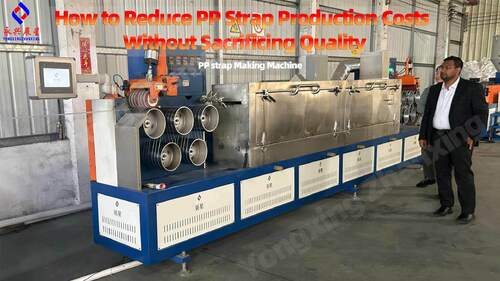
Reducing production costs is one of the main goals for every PP strap manufacturer. However, cutting costs in the wrong areas can lead to poor strap quality, unstable production, higher waste rates, and dissatisfied customers.
The key to long-term profitability is not simply spending less—it's improving production efficiency while maintaining consistent product quality.
This guide explains practical ways to reduce PP strap manufacturing costs without sacrificing the performance of your finished products.
Focus on Production Efficiency Instead of Material Price
Many new manufacturers try to reduce costs by purchasing the cheapest PP raw materials available.
While this may lower purchasing costs in the short term, inconsistent raw materials often lead to unstable extrusion, increased scrap, and more machine adjustments.
Instead, manufacturers should focus on improving overall production efficiency. Stable production with less waste usually delivers greater long-term savings than using low-cost materials.
Choose the Right PP Strap Making Machine
Machine performance has a direct impact on manufacturing costs.
A modern PP Strap Making Machine helps manufacturers reduce operating costs by providing:
Stable extrusion performance
Accurate temperature control
Consistent strap dimensions
Automatic winding
Reduced material waste
Although high-quality equipment may require a larger initial investment, it usually lowers operating costs throughout the machine's service life.
Improve Raw Material Management
Raw materials represent the largest portion of production costs.
To improve cost efficiency:
Purchase materials from reliable suppliers.
Store raw materials in a clean and dry environment.
Maintain consistent material quality during production.
Select the appropriate ratio of virgin and recycled PP according to product requirements.
Good material management helps reduce waste while maintaining stable strap quality.
Reduce Production Waste
Every kilogram of wasted material increases manufacturing costs.
Common causes of waste include:
Incorrect processing temperatures
Unstable machine operation
Poor operator experience
Inconsistent raw materials
Delayed machine adjustments
Regular production monitoring and machine optimization help reduce scrap and improve finished product consistency.
Reduce Energy Consumption
Electricity is another important operating expense.
Manufacturers can reduce energy costs by:
Using energy-efficient heating systems
Optimizing cooling efficiency
Performing regular equipment maintenance
Avoiding unnecessary machine downtime
A well-maintained PP Strap Making Machine consumes less energy while maintaining stable production.
Prevent Machine Downtime
Unexpected downtime not only delays production but also increases labor and maintenance costs.
Preventive maintenance should include:
Checking heaters and sensors
Cleaning the screw and barrel
Inspecting rollers and bearings
Maintaining the automatic winding system
Replacing worn parts before failure
Preventive maintenance is usually far less expensive than emergency repairs.
Improve Operator Training
Even advanced equipment depends on skilled operators.
Proper training helps operators:
Adjust machine parameters correctly
Identify production problems early
Reduce material waste
Improve production consistency
Increase equipment efficiency
Experienced operators contribute directly to lower production costs.
Think Long-Term Instead of Short-Term
Reducing production costs is not about purchasing the cheapest equipment or materials.
Successful manufacturers focus on:
Stable production
Reliable equipment
Efficient energy use
Lower maintenance costs
Consistent product quality
A long-term production strategy delivers greater profitability than short-term cost reductions.
Why Choose Yongxing Zhanxing?
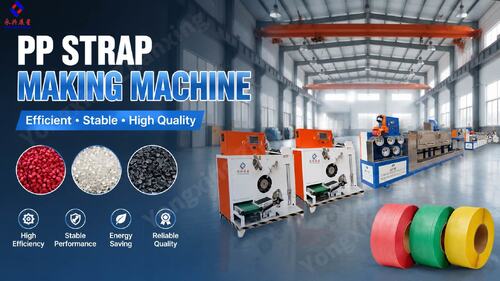
Yongxing Zhanxing manufactures reliable PP Strap Making Machines designed for efficient, stable, and cost-effective production.
Our equipment offers:
Stable production performance
Energy-saving design
Automatic winding technology
Easy maintenance
Professional technical support
Every machine is factory-tested before shipment, and our engineering team provides installation, commissioning, and operator training to help customers achieve successful production from day one.
Conclusion
Reducing PP strap production costs does not require sacrificing product quality.
By improving production efficiency, reducing waste, optimizing energy consumption, and investing in reliable PP Strap Making Machines, manufacturers can lower operating costs while producing high-quality PP straps that meet customer expectations.
A smarter production process—not simply lower spending—is the key to long-term business success.
Recommended Reading
Production Guides
PP Strap Production Cost Guide: Cost to Produce 1 Ton of PP Strap
How to Choose the Right PP Strap Production Line
Virgin PP vs Recycled PP Materials for PP Strap Manufacturing
Common PP Strap Quality Problems and Solutions
PP Strap vs PET Strap: Which Packaging Solution Is Right for Your Business?
Reading Time: 5 min
One of the most frequently asked questions from new investors is:
"How much does it cost to produce 1 ton of PP strap?"
The answer depends on much more than the price of PP raw materials. Production costs are influenced by machine efficiency, electricity consumption, labor, maintenance, and production management.
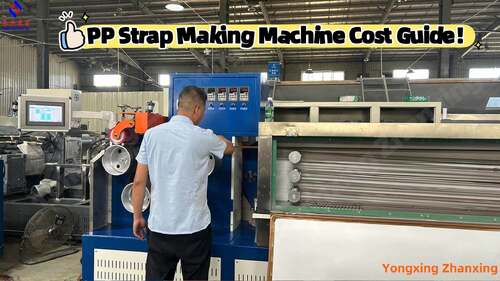
If you are planning to invest in a PP Strap Making Machine, understanding these cost factors will help you make better purchasing decisions and improve long-term profitability.
What Makes Up the Cost of Producing PP Strap?
The total manufacturing cost of PP strap is made up of several key elements.
The most important include:
PP raw materials
Electricity consumption
Labor costs
Machine maintenance
Production efficiency
Packaging and transportation
Factory operating expenses
Instead of focusing on only one cost, successful manufacturers optimize the entire production process.
1. Raw Material Cost
Raw material is usually the largest production expense.
Most manufacturers use:
Virgin PP
Recycled PP
A combination of virgin and recycled materials
Choosing the right material depends on your target market and required strap quality.
Stable raw materials reduce production waste and improve product consistency, helping lower the overall manufacturing cost.
2. Machine Efficiency
The performance of your PP Strap Making Machine directly affects production cost.
A high-efficiency machine can:
Produce more straps per hour
Reduce material waste
Improve production stability
Lower the cost per ton
Reliable equipment also minimizes downtime and increases overall factory productivity.
3. Electricity Consumption
Energy costs are another important factor.
Modern PP Strap Making Machines use:
Energy-saving heating systems
Optimized extrusion technology
Efficient cooling systems
Automatic production control
Although electricity prices vary between countries, an energy-efficient machine can significantly reduce long-term operating costs.
4. Labor and Daily Maintenance
Automation has greatly reduced labor requirements, but regular maintenance remains essential.
Routine inspection of heaters, screws, rollers, and the automatic winding system helps prevent unexpected downtime and keeps production running smoothly.
Well-maintained equipment also extends machine life and reduces repair costs.
5. Production Waste
Every kilogram of wasted material increases manufacturing cost.
Common causes include:
Unstable raw materials
Incorrect temperature settings
Improper machine adjustment
Poor operator experience
Choosing a stable PP Strap Making Machine and providing proper operator training can greatly reduce production waste.
How Can Manufacturers Reduce Production Costs?
Reducing production cost is not simply about buying cheaper raw materials.
Successful manufacturers usually focus on:
Selecting high-quality raw materials
Investing in reliable PP Strap Making Machines
Improving production efficiency
Reducing machine downtime
Performing preventive maintenance
Optimizing production schedules
These improvements often generate greater long-term savings than reducing material costs alone.
Is a Better Machine Worth the Investment?
Some buyers choose equipment based only on the lowest purchase price.
However, lower-cost machines may lead to:
Higher electricity consumption
More production waste
Increased maintenance
Lower production efficiency
Higher operating costs over time
Investing in a reliable PP Strap Making Machine can improve production stability, reduce manufacturing costs, and provide a faster return on investment.
Why Choose Yongxing Zhanxing?
Yongxing Zhanxing specializes in manufacturing PP Strap Making Machines, PET Strap Making Machines, and complete packaging strap production solutions.
Our machines are designed for:
Stable production performance
Energy-efficient operation
Automatic winding
Easy maintenance
Long-term reliability
Every machine is fully tested before shipment, and our engineering team provides professional installation and technical support to help customers achieve a successful production start-up.
Conclusion
The cost of producing one ton of PP strap is determined by many factors, including raw materials, machine performance, electricity consumption, labor, and production management.
By investing in a reliable PP Strap Making Machine and continuously optimizing production efficiency, manufacturers can reduce operating costs, improve product quality, and achieve better long-term profitability.
Recommended Reading
Production Guides
Common PP Strap Quality Problems and Solutions
New 4-Output PP Strap Making Machine Trial Run for Egypt
PP Strap Production Line Installation in Zhongshan
PP Strap vs PET Strap: Which Packaging Solution Is Right for Your Business?
Reading Time: 5 min
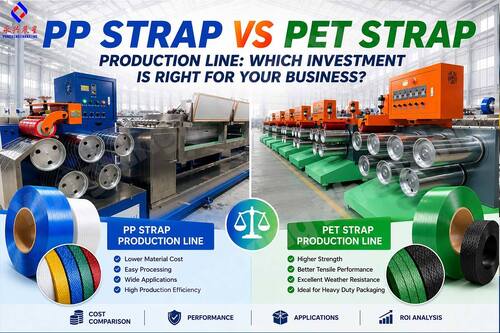
When investing in a plastic strap manufacturing business, one of the first decisions is whether to produce PP straps or PET straps. Although both products are widely used for packaging, they serve different markets and require different production equipment.
For manufacturers and investors, choosing the right production line is more important than simply comparing the straps themselves. This article explains the differences between PP Strap Making Machines and PET Strap Production Lines to help you make the right investment decision.
Understanding PP Strap Production
PP straps are widely used for light and medium-duty packaging applications. They are commonly found in logistics, food packaging, paper products, cartons, textiles, and consumer goods.
A PP Strap Making Machine offers several advantages:
Lower initial investment
Simple operation and maintenance
Stable production performance
Suitable for various PP raw materials
Fast return on investment
For companies entering the strap manufacturing industry, PP production is often the ideal starting point.
Understanding PET Strap Production
PET straps are designed for heavy-duty packaging and industrial applications. They are widely used for steel coils, aluminum products, timber, bricks, and other heavy loads.
A PET Strap Production Line typically features:
High tensile strength production
Excellent durability
Recycled PET bottle flake processing
Higher product value
Greater long-term profitability
Although the initial investment is higher, PET production offers excellent opportunities for industrial packaging markets.
PP Strap Making Machine vs PET Strap Production Line
Before purchasing a production line, consider the following factors.
Investment Budget
PP production lines generally require a lower initial investment, making them suitable for startups and expanding businesses.
PET production lines require more advanced equipment but can produce higher-value products for industrial customers.
Raw Materials
PP production uses virgin or recycled polypropylene materials.
PET production mainly uses recycled PET bottle flakes, providing both environmental and cost advantages.
Target Market
If your customers mainly package cartons, textiles, food, or consumer products, PP straps are usually the better choice.
If you serve steel mills, construction material suppliers, or heavy industries, PET straps provide better performance.
Future Business Growth
Many successful manufacturers begin with a PP Strap Making Machine and later expand by adding a PET Strap Production Line as their business grows.
Which Production Line Should You Choose?
There is no single answer that fits every business.
Choose a PP Strap Making Machine if you are looking for:
Lower investment
Easy operation
Fast production
Stable local market demand
Choose a PET Strap Production Line if you need:
High-strength straps
Industrial packaging solutions
Premium product positioning
Long-term production expansion
Working with an experienced equipment manufacturer can help you select the most suitable configuration based on your production goals and market requirements.
Why Choose Yongxing Zhanxing?
Yongxing Zhanxing specializes in manufacturing complete PP Strap Making Machines, PET Strap Production Lines, and automatic winding systems for customers worldwide.
Every production line undergoes comprehensive factory testing before shipment, followed by professional installation support and technical training to ensure reliable operation and long-term performance.
Whether you are starting your first strap production business or expanding an existing factory, our engineering team can provide customized manufacturing solutions that match your investment plan.
Conclusion
Both PP and PET strap production offer excellent business opportunities. The right choice depends on your target customers, investment budget, available raw materials, and future development strategy.
By selecting the appropriate production line, manufacturers can improve production efficiency, control operating costs, and build a competitive packaging business.
Recommended Reading
Learn More
How to Choose the Right PP Strap Production Line
Virgin PP vs Recycled PP Materials for PP Strap Manufacturing
Common PP Strap Quality Problems and Solutions
Latest Project
New 2-in-4 PP Strap Making Machine Successfully Completed Trial Run for Egypt
PP Strap Making Machine Trial Run Successfully Completed in Anhui, China
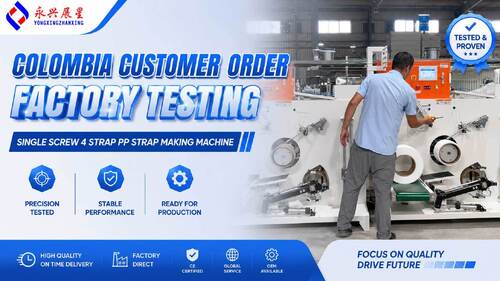
Our PP Strap Making Machine has successfully completed its factory trial run in Anhui, China.
Before shipment, every production line undergoes comprehensive testing to ensure stable operation, consistent strap quality, and reliable performance. During this trial run, the machine operated smoothly throughout the entire production process, producing PP straps with uniform width, clear embossing, stable tensile strength, and neatly wound rolls.
Our engineering team carefully inspected every production stage, including extrusion, stretching, cooling, embossing, and automatic winding, to ensure the machine meets our quality standards before delivery.
Factory testing helps reduce installation time, improves production stability, and gives customers greater confidence before the equipment arrives at their facility.
Watch the Full Trial Run Video
Want to see the complete production process?
The full trial run video is available on our official YouTube channel, where you can watch the machine operating from raw material feeding to finished PP strap winding.
▶ Watch the Full Trial Run Video
Looking for a Reliable PP Strap Production Line?
Yongxing Zhanxing provides customized PP strap production line solutions for manufacturers worldwide.
If you are planning to start a new PP strap manufacturing business or upgrade your existing production line, feel free to contact our team for professional technical support and customized solutions.
PP strapping is widely used in carton packaging, logistics, warehouse operations, and light-duty pallet applications. As market demand continues to grow, manufacturers are under increasing pressure to produce high-quality PP straps with stable performance and consistent appearance.
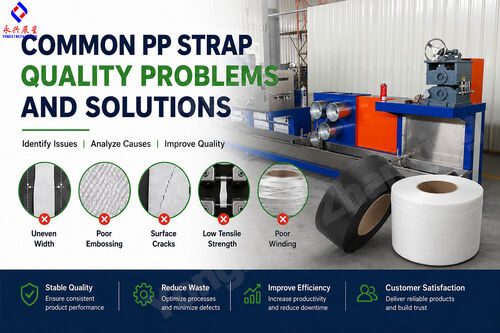
However, even with modern equipment, production issues can still occur. Problems such as uneven width, poor embossing, low tensile strength, and winding defects not only affect product quality but may also lead to customer complaints and increased production costs.
Understanding the causes of these problems and implementing the right solutions can help manufacturers improve efficiency, reduce waste, and maintain a competitive advantage.
Why PP Strap Quality Is Important
The quality of PP strapping directly impacts packaging safety and operational efficiency.
A high-quality PP strap should provide:
Consistent width and thickness
Stable tensile strength
Uniform embossing pattern
Smooth surface appearance
Neat and stable winding
Poor-quality straps may break during transportation, cause packaging failures, or reduce the performance of automatic strapping machines.
1. Uneven Strap Width
Uneven width is one of the most common issues in PP strap production.
When strap width fluctuates, the finished product may not feed properly through automatic strapping machines, resulting in operational interruptions and packaging inefficiencies.
Possible Causes
Unstable extrusion pressure
Worn or damaged die lips
Improper cooling conditions
Incorrect haul-off speed settings
Solutions
Regularly inspect and maintain extrusion dies
Ensure stable production parameters
Optimize cooling performance
Calibrate line speed and tension systems
2. Poor Embossing Quality
Embossing increases surface friction and improves sealing performance. A weak or inconsistent embossing pattern may reduce strap grip and negatively affect packaging stability.
Possible Causes
Worn embossing rollers
Incorrect roller pressure
Improper embossing temperature
Low-quality roller patterns
Solutions
Replace damaged embossing rollers
Adjust roller pressure settings
Maintain suitable operating temperatures
Use precision-machined embossing rollers
For more information about embossing technologies, you may also read:
PP Strap Embossing & Printing Options
3. Surface Cracks and Brittleness
Surface cracks can significantly reduce the strength and durability of PP straps. This issue often becomes more noticeable during transportation or customer use.
Possible Causes
Poor-quality recycled materials
Excessive moisture content
Improper cooling process
Overstretching during production
Solutions
Use stable and clean raw materials
Improve material drying procedures
Optimize cooling parameters
Adjust stretching ratios appropriately
4. Low Tensile Strength
Tensile strength is one of the most important performance indicators of PP strapping.
Insufficient tensile strength increases the risk of strap failure during packaging, storage, and transportation.
Possible Causes
Inconsistent raw material quality
Improper stretching process
Incorrect temperature settings
Poor molecular orientation
Solutions
Optimize production parameters
Maintain stable extrusion temperatures
Improve stretching control systems
Implement stricter quality inspections
5. Poor Winding Quality
Poor winding affects storage, transportation, and customer perception of product quality.
Typical winding defects include:
Loose winding
Edge misalignment
Uneven roll shape
Excessive roll deformation
Solutions
Maintain stable winding tension
Regularly inspect traversing systems
Ensure proper roll alignment
Use automatic winding control systems
How Modern PP Strap Production Lines Help Reduce Quality Problems
Modern PP strap production lines are designed to improve consistency and reduce common manufacturing defects.
Key advantages include:
PLC automatic control systems
Precise temperature management
Stable stretching technology
Automatic winding systems
Improved production efficiency
These technologies help manufacturers achieve more consistent product quality while reducing labor requirements and material waste.
In future articles, we will also compare the differences between PP and PET strapping materials and discuss how manufacturers can optimize production costs without sacrificing product quality.
Related Articles:
PP Strap vs PET Strap: Which Packaging Solution Is Right for Your Business?
PP Strap Production Cost Guide: Cost to Produce 1 Ton of PP Strap
Conclusion
Producing high-quality PP strapping requires the right combination of raw materials, equipment, and process control.
By identifying and addressing common issues such as uneven width, poor embossing, surface cracking, low tensile strength, and winding defects, manufacturers can improve product consistency, reduce waste, and enhance customer satisfaction.
For manufacturers seeking reliable PP strap production solutions, investing in stable equipment and effective quality control systems remains the most efficient path toward long-term success.
Recommended Reading ↓↓↓
How to Choose the Right PP Strap Production Line
Virgin vs Recycled PP Materials
PP Strap Embossing & Printing Options



 english
 français
 Deutsch
 Italiano
 Русский
 Español
 português
 Nederlandse
 ελληνικά
 日本語
日本語
 한국
한국
 العربية
 हिन्दी
 Türkçe
 indonesia
 tiếng Việt
 ไทย
ไทย
 বাংলা
বাংলা
 فارسی
فارسی
 polski